MUTCD : What Virginia's Adoption Means for Your Development Project
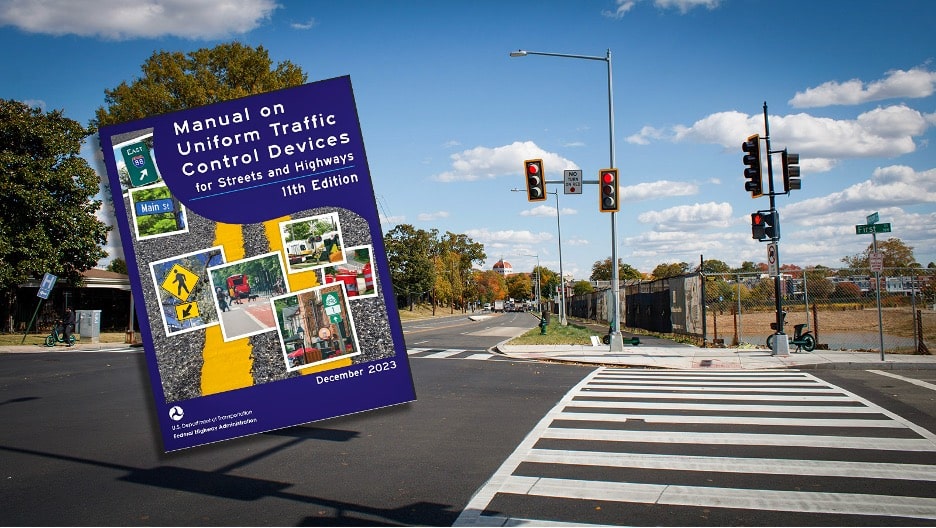
The Federal Highway Administration published the 11th Edition of the Manual on Uniform Traffic Control Devices (MUTCD) in late 2023, setting a two-year compliance deadline that arrived on January 18, 2026. Virginia recently adopted its own version—the Virginia MUTCD version 11.0—marking one of the most significant updates to traffic control standards in over a decade.
For developers, property owners, and design professionals working in the DMV region, these changes aren’t just technical updates. They affect how roads, bike facilities, and pedestrian infrastructure must be designed, what safety features are required in work zones, and ultimately what improvements jurisdictions will expect from your project.
Why the MUTCD Matters for Your Project
The Manual on Uniform Traffic Control Devices is the federal standard governing every sign, signal, and pavement marking on public roads. While it might not be as well-known as zoning codes or building regulations, the MUTCD directly influences your development costs and approval timeline.
When jurisdictions review your transportation impact analysis or site plan, they’re checking compliance with MUTCD standards. New bicycle facilities, crosswalk designs, work zone requirements, and traffic signal specifications all flow from this document. When the MUTCD changes, those requirements meaning what was acceptable under the 2009 edition may need to be redesigned under the 2023 standards.
The federal deadline for state adoption was January 18, 2026, giving states two years to bring their own standards into compliance.
Virginia took a comprehensive approach, creating a Virginia-specific version of MUTCD that incorporates federal standards with state modifications. VDOT also updated the Virginia Work Area Protection Manual (VA WAPM) version 11.0 to accompany the new MUTCD—a critical companion document that takes the federal work zone chapter and expands it into robust, detailed guidance.
The Changes That Matter Most
The 11th Edition represents the first major MUTCD update since 2009 and reflects a fundamental shift toward multimodal safety. Several changes will directly affect development projects across the region:
Bicycle Facilities: Major Expansion
The bicycle facility chapter tripled in size, codifying treatments that previously required special approval or weren’t permitted at all. The new MUTCD now includes standards for separated bike lanes, bike boxes and two-stage turn boxes (designed to make it easier for cyclists to make left turns on a multi-lane road), bicycle-specific signals, and contraflow bicycle lanes.
Most notably for Virginia: green paint for bike facilities is now federally standardized. VDOT is preparing best practices for when green markings are warranted, but the entire state will have access to this treatment that previously existed in regulatory limbo. For developers, this means you can confidently propose modern bicycle infrastructure that aligns with community expectations and federal standards.
Work Zone Safety: Stricter Requirements
If your project involves any construction that affects traffic flow, the updated VA Work Area Protection Manual brings significant changes:
- Longitudinal buffer spaces are now required: Where they were previously recommended, buffer spaces separating workers from traffic are now mandatory.
- Enhanced pedestrian protection: More guidance and stricter standards for maintaining pedestrian safety and mobility through construction zones.
- Audible information devices: Temporary Audible Information Devices (TAIDs) are now required with all “Sidewalk Closed Cross Here” signs and midblock sidewalk closings—an important accessibility enhancement.
- Extended merging and shifting lengths: Work zones require longer advance warning and transition areas.
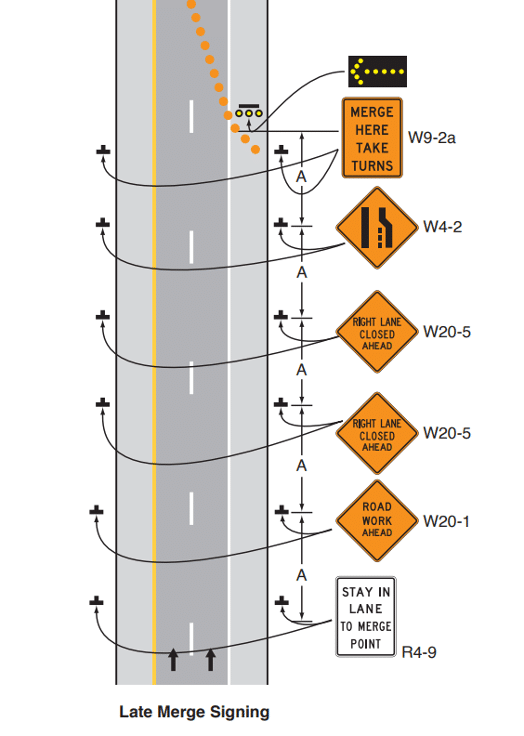
- And last, but not least, our favorite! Late merge guidance is now standardized: The “Late Merge” configuration many drivers have experienced is now defined in Figure 6N.01 of the VA WAPM (pictured), bringing consistency to how merge areas are managed.
Pedestrian Safety: Stronger Standards
The 11th Edition strengthens pedestrian protection across the board:
- High-visibility “continental” crosswalk patterns are encouraged, particularly on roads with speeds of 40 mph or higher or with more than 12,000 daily vehicle trips
- Accessible Pedestrian Signals (APS) now have their own dedicated chapter with clearer guidance incorporating ADA requirements and Public Right-of-Way Accessibility Guidelines (PROWAG)
- Uncontrolled crossings require engineering studies before installation
Automated Vehicles: Future-Proofing Infrastructure
Part 5 introduces traffic control considerations for automated vehicles—something that wasn’t on designers’ radar in 2009. While these are considerations rather than hard requirements, they provide flexibility to accommodate the future fleet. This includes guidance on consistent signal-face placement, wider pavement markings for better machine vision detection, and maintenance practices suited to both human drivers and automated systems.
Speed Limit Setting: New Methodology
The elimination of the 85th percentile rule as the sole determinant of speed limits is one of the most significant policy shifts. Engineers must now also consider land-use context, crash history, pedestrian activity, and roadway function when setting speeds on urban, suburban, and main-street rural arterials. This contextual approach better aligns speed limits with community safety goals.
Already Working with the New Standards
At Gorove Slade, we’re already working with the 11th edition of the MUTCD as well as the Virginia MUTCD version 11.0 on active projects. We’ve been tracking these changes through the development process and know which provisions affect different project types. We are also closely monitoring locality adoption of the 11th edition of the MUTCD and what types of policy changes are being enacted as a result.
The developer community has been particularly attentive to the bicycle facility updates. Modern multimodal developments benefit from having access to standardized treatments that enhance connectivity and safety—features that increasingly influence project marketability and community support.
What This Means for Your Project Timeline
Jurisdictional staff across Virginia, Maryland, and DC are familiarizing themselves with these updates, and review processes may take slightly longer as everyone adapts to new requirements. However, being ahead of the curve—understanding which standards apply to your project type—can actually streamline approvals.
If you’re in early planning stages, now is the time to understand how these changes affect your site design. Projects submitted under old assumptions about what bicycle facilities are permissible, or work zone configurations, or pedestrian crossing requirements may face revision requests during review.
Your Partner Through the Transition
Understanding how MUTCD changes affect your specific project requires expertise in both the manual itself and local jurisdiction implementation. At Gorove Slade, we stay current with these regulatory changes so your projects don’t face unexpected delays or redesigns.
Whether you’re evaluating bicycle connectivity requirements, designing work zone traffic control plans, or navigating new crosswalk standards, we’re here to help you understand what the Virginia MUTCD version 11.0 means for your development.
Have questions about how these changes affect your project? Contact Omran El-Khatib, PE. Our team is ready to help you navigate the new standards.