
Curbside management and public realm design for a world-class DC destination.
Description
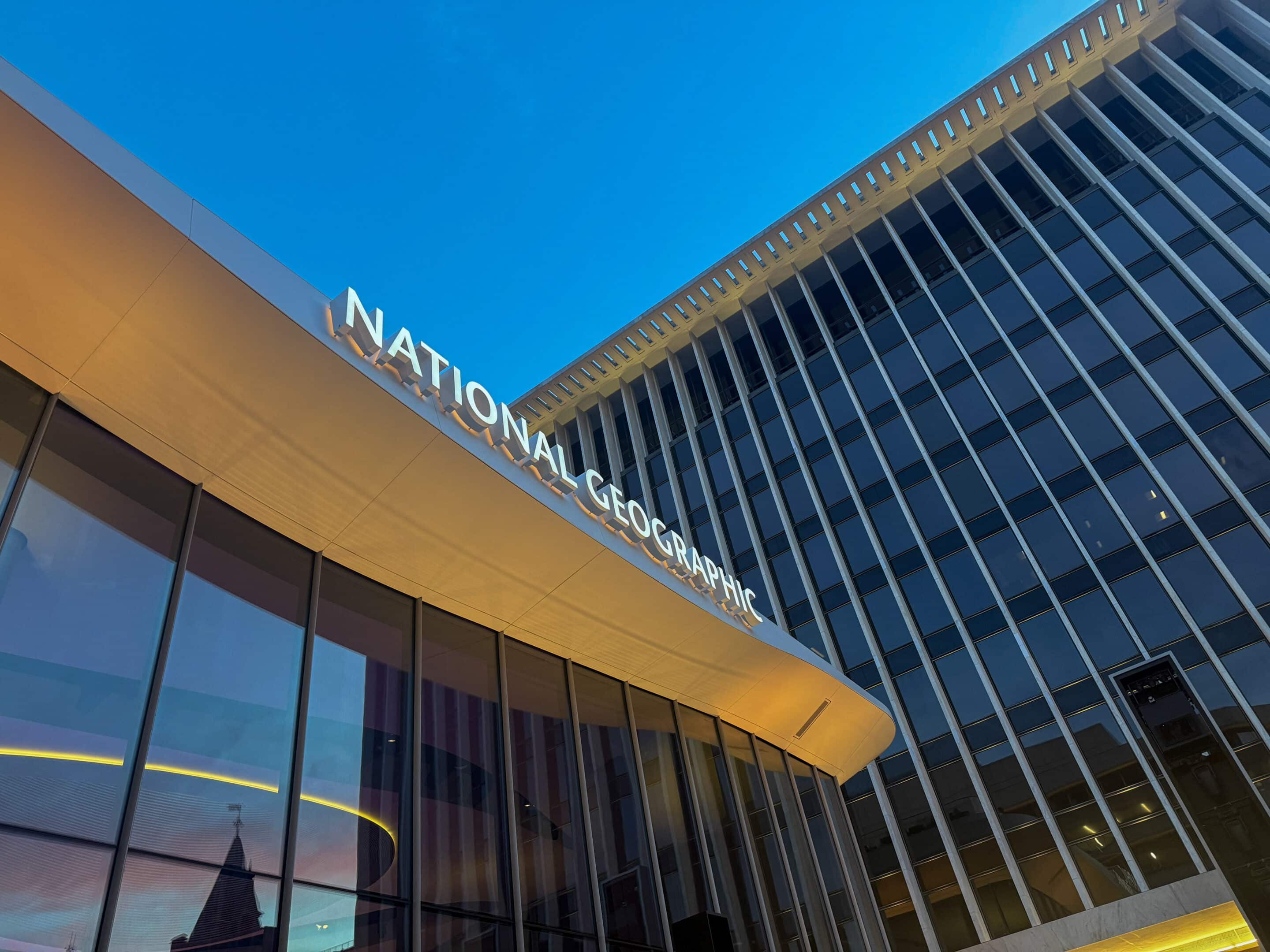
Few institutions carry the weight of discovery the way National Geographic does. When the Society set out to reimagine its historic campus at 1145 17th Street NW in Washington, DC, transforming it from headquarters-and-museum into a fully public Museum of Exploration, the challenge was as much about the sidewalk and the curb as it was about the exhibit hall. Gorove Slade served as the transportation planning and engineering partner on the project, working alongside Hickok Cole to reconfigure the public realm surrounding the entire city block in advance of the museum’s June 2026 public opening.
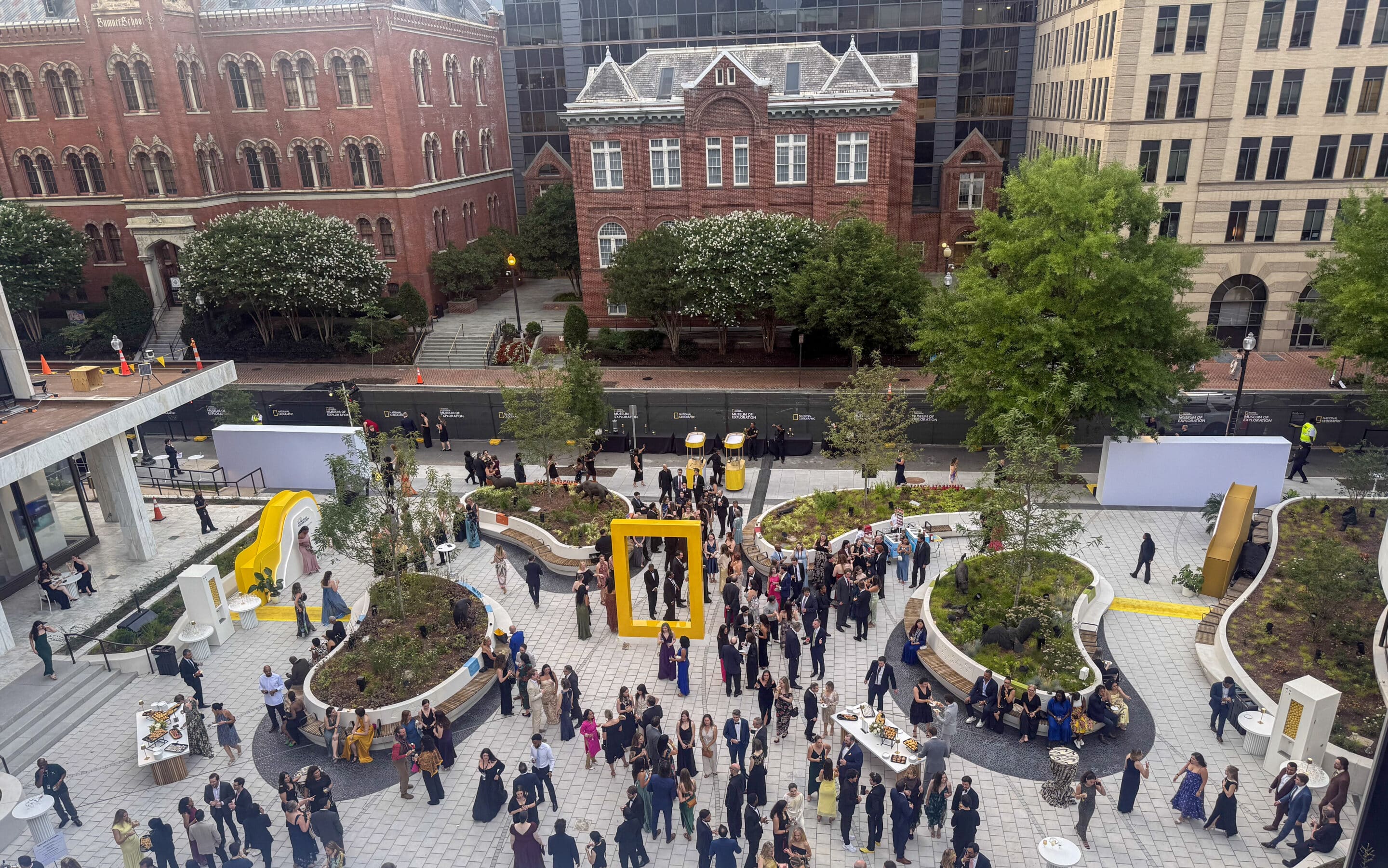
The National Geographic campus occupies a full city block in downtown Washington, DC, bounded by 16th Street, 17th Street, M Street, and Sumner Row NW. The museum itself spans over 100,000 square feet and features National Geographic-curated exhibitions, immersive educational experiences, a state-of-the-art theater, restaurant, and retail. Converting the campus for full public access required a comprehensive rethinking of how pedestrians, cyclists, transit riders, rideshare users, and motorcoach groups would safely arrive, depart, and move around the building.
The Curbside Challenge
The campus sits at one of the more demanding intersections of the District’s multimodal network. 16th Street NW operates a southbound bus-only lane from 7:00 AM to 9:30 AM on weekdays, used by Metrobus Routes D6X and D60 with headways as short as six minutes during the morning commuter peak. M Street historically carried a no-parking designation on the relevant block face. And 17th Street required both a new protected bicycle facility and a redesigned pick-up/drop-off area. Addressing these conditions simultaneously, while coordinating with DDOT across multiple regulatory tracks, was central to our team’s work.
16th Street: Motorcoach Management
The 16th Street NW entrance was designated as the primary arrival point for student groups, school trips, and senior and mobility-impaired visitors accessing the museum’s Education Center. Gorove Slade developed a detailed Motorcoach Management Plan in coordination with National Geographic operations staff and DDOT, establishing two accessible loading and unloading spaces spanning 165 feet along 16th Street NW.
A secondary staging space of 87 feet was secured on the north side of M Street NW to serve as overflow and to accommodate motorcoach demand during the morning bus-lane restriction window. The plan anticipates up to eight motorcoaches per hour during peak spring visitation periods, with all arrivals pre-scheduled in staggered 15–30 minute intervals to prevent curbside queuing and minimize impacts on adjacent transit and pedestrian activity.
M Street: New Grand Entrance and Rideshare Access
The M Street side of the campus was redesigned to accommodate a new grand public entrance to the museum. Working with DDOT, Gorove Slade secured a reallocation of curb space that had historically been designated no-parking to create a functional pick-up/drop-off zone for rideshare services. This change required formal coordination with the District and careful sign and pavement marking design to clearly communicate the new curbside rules to drivers and visitors alike.
17th Street: Protected Bike Lane and PUDO Zone
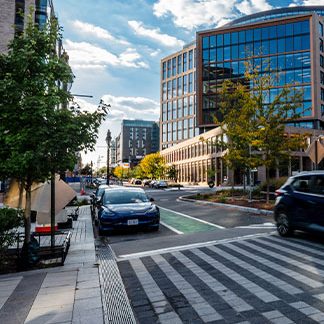
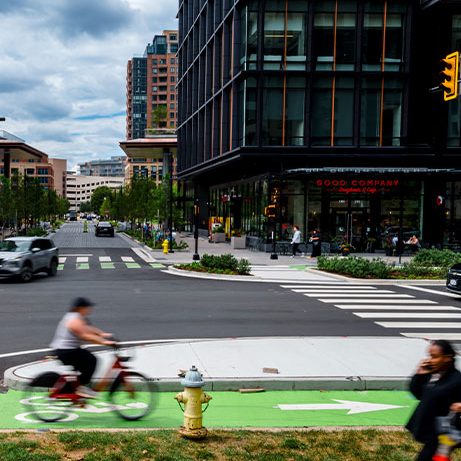
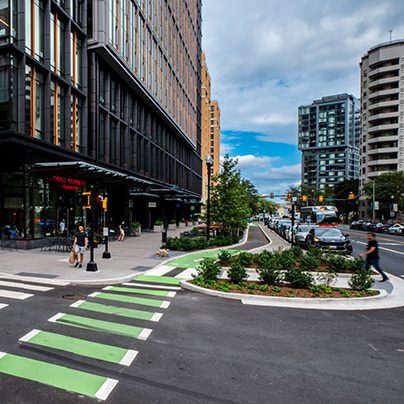
17th Street NW presented a different set of coordination challenges. Gorove Slade advised on how the public realm along 17th Street would function as the campus transitions from primarily administrative use toward a future hospitality program. A new pick-up/drop-off (PUDO) area was developed along 17th Street to serve the building’s evolving program. Additionally, we worked with DDOT on the design and implementation of a protected bicycle lane along 17th Street, a coordination effort that required a lane shift to accommodate the new facility within the existing roadway envelope.
What’s Next and Why We’re Proud to Play a Role
National Geographic has publicly announced plans to explore future hotel use within the existing administrative building on the campus. Gorove Slade’s curbside and public realm work was developed with that longer-term program in mind, including the 17th Street PUDO zone, which anticipates hotel arrival and departure demand alongside other campus uses.
Delivering approvals across 16th, 17th, and M Streets simultaneously required ongoing coordination with DDOT’s multiple review tracks, including the Clear Lanes enforcement program, standard signing and pavement marking approvals, and the curbside reallocation process. Our familiarity with the District’s regulatory landscape allowed the team to advance submissions in parallel and keep the project on track for the museum’s June 2026 opening date.
Our team was honored to contribute to a project that will shape how tens of thousands of visitors, students, and tour groups experience one of DC’s marquee destinations. Getting the curbside right here means school buses arrive safely and on time, rideshare pickups don’t spill into the travel lane, cyclists have a protected facility, and pedestrians can move confidently around the building. That’s the kind of outcome Gorove Slade builds toward every project.
Details
- Client: National Geographic
- Location: Dupont Circle, Washington, DC
- Campus Size: 100,000 SF
- Transportation Options:
- Farragut North (Red Line) and Farragut West (Blue/Orange/Silver) Metro stations
- D60 and D6X buses
- Artistic bike racks and multiple bikeshare options
- A parking-free zone for drop-offs on M Street.
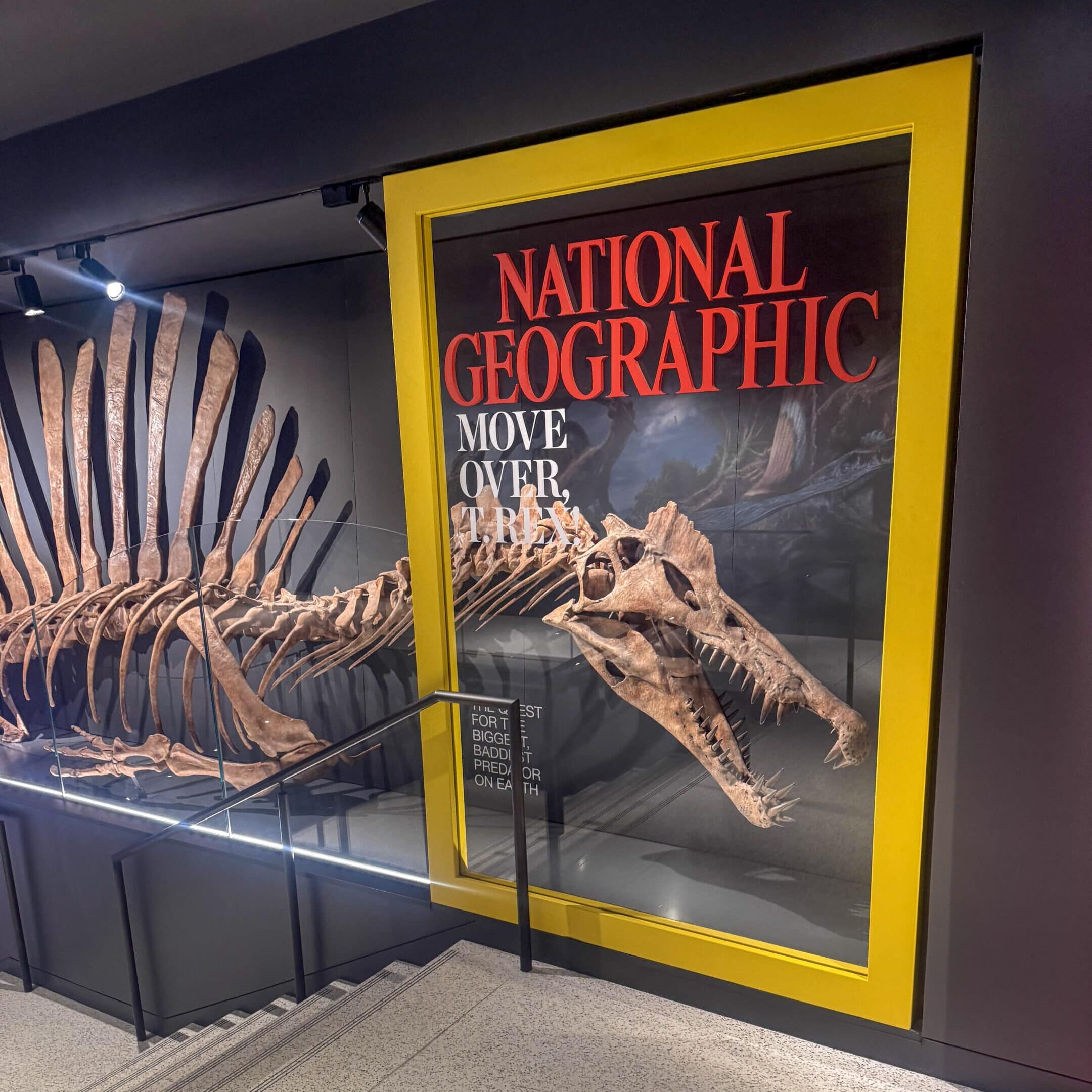
Iconic National Geographic Magazine covers are brought to life in the Museum of Exploration
Relevant Services
Studies
Entitlement
Operations
Planning
Design
Relevant Team Members

Dan VanPelt
Vice President, Senior Principal

Sam Tignor
Senior Associate, Senior Project Manager

Sasha Ksanznak- Redmon
Associate, Senior Project Manager

Maria Ponton
Senior Transportation Designer