
Maximizing Access and Throughput for High-Demand Retail Fueling Sites
Description
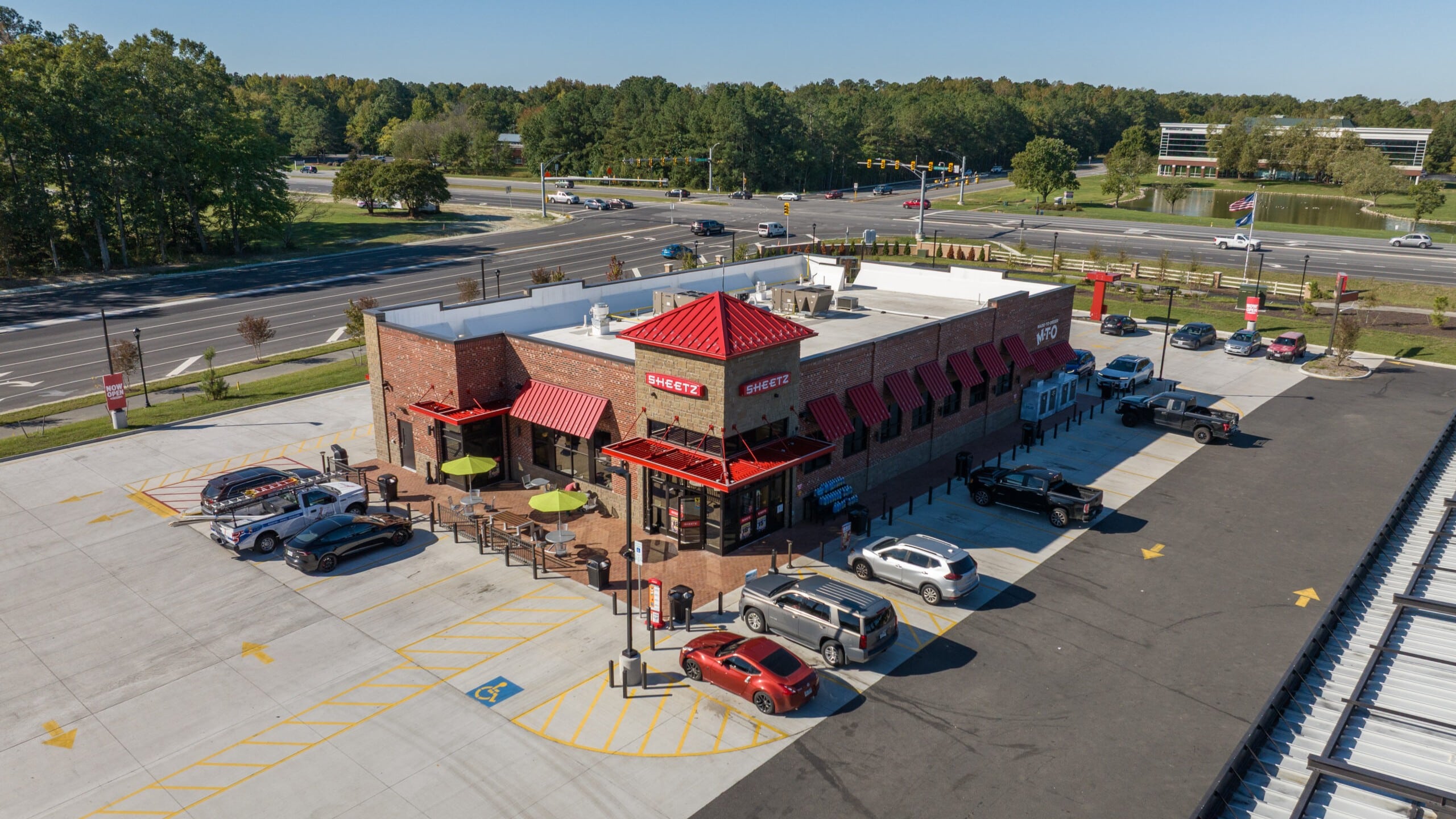
Whether freestanding fuel and food destinations or evolving multi-service hubs with drive-throughs and EV charging, convenience stores sit at the intersection of high customer demand and complex traffic engineering. These sites generate significant vehicle activity in tight timeframes, and their success depends entirely on how easily customers can get in, get what they need, and get back on their way.
Gorove Slade has worked with convenience store operators, franchisees, and developers across Virginia and the broader DMV region for years, including national chains that need consistent site performance across dozens of locations. Our teams understand these businesses from the inside, how customers actually use these sites, what operators need day to day, and how to engineer sites that deliver. From the earliest stages of site evaluation through permitting, DOT coordination, and final design, we serve as a knowledgeable, embedded partner: one that knows the regulatory landscape as well as the commercial realities of these stores.
Challenges We Address
The fundamental tension in convenience store transportation engineering is access — and the numbers explain why. The ITE Trip Generation Manual estimates that roughly 75% of convenience store trips are pass-by trips, meaning customers are already on the road heading somewhere else. They’re not making a dedicated trip; they’re stopping because the store is right there and easy to get into. Make it hard to turn in, and they keep driving.
These retailers want to be at the corner of a busy intersection for exactly that reason, but busy intersections are precisely where access is most constrained. The Virginia Department of Transportation (VDOT), for example, generally prohibits full left-turn access at corner locations, meaning that the left-in / left-out movements that operators want most are often the hardest to secure.
Beyond access, every convenience store project involves:
- Ingress / Egress: We understand that efficient ingress and egress is the cornerstone of a successful convenience store. Long queues and delays at the site driveways not only drive away potential business but are also among the most common reasons convenience store site plans are pushed back.
- Level of service: Reviewers want to see that a new site will not overwhelm a nearby intersection. We use data to make that case.
- Trip generation: Convenience stores with drive-throughs and EV charging stations produce trip patterns that differ meaningfully from older approaches. Getting this right upfront avoids costly redesigns later.
- Internal circulation: Tight sites demand precise design. Fuel canopy geometry, delivery vehicle routing, pedestrian paths, and queuing lanes must all work together without conflict.
Our Transportation Engineering Approach
Gorove Slade’s work on convenience store projects typically begins well before a site plan is ever filed. Operators and developers routinely engage us for site feasibility analysis: an early-stage review that identifies how many waivers a given location would require, whether left-turn access is achievable, and whether queue conditions present a fundamental obstacle to approval. This due diligence work saves clients from investing in sites that cannot be permitted as envisioned.
Once sites move forward, we provide:
- Access negotiation with the DOT: We advocate for the maximum achievable access configuration, including left-turn movements where possible, through rigorous technical documentation and agency relationships built over decades of practice.
- Traffic impact studies and trip generation memoranda: Our analyses reflect the actual operations of modern convenience stores, including drive-through queuing behavior and the emerging trip patterns associated with EV charging stations. In fact, VDOT has relied on our trip generation work to inform its guidance for this land use type.
- Queuing and level of service analysis: We model conditions at the site driveways and adjacent intersections to identify constraints and develop solutions to satisfy both the operator and the reviewing agency.
- Site circulation design: Our team designs internal layouts that balance efficiency with safety.
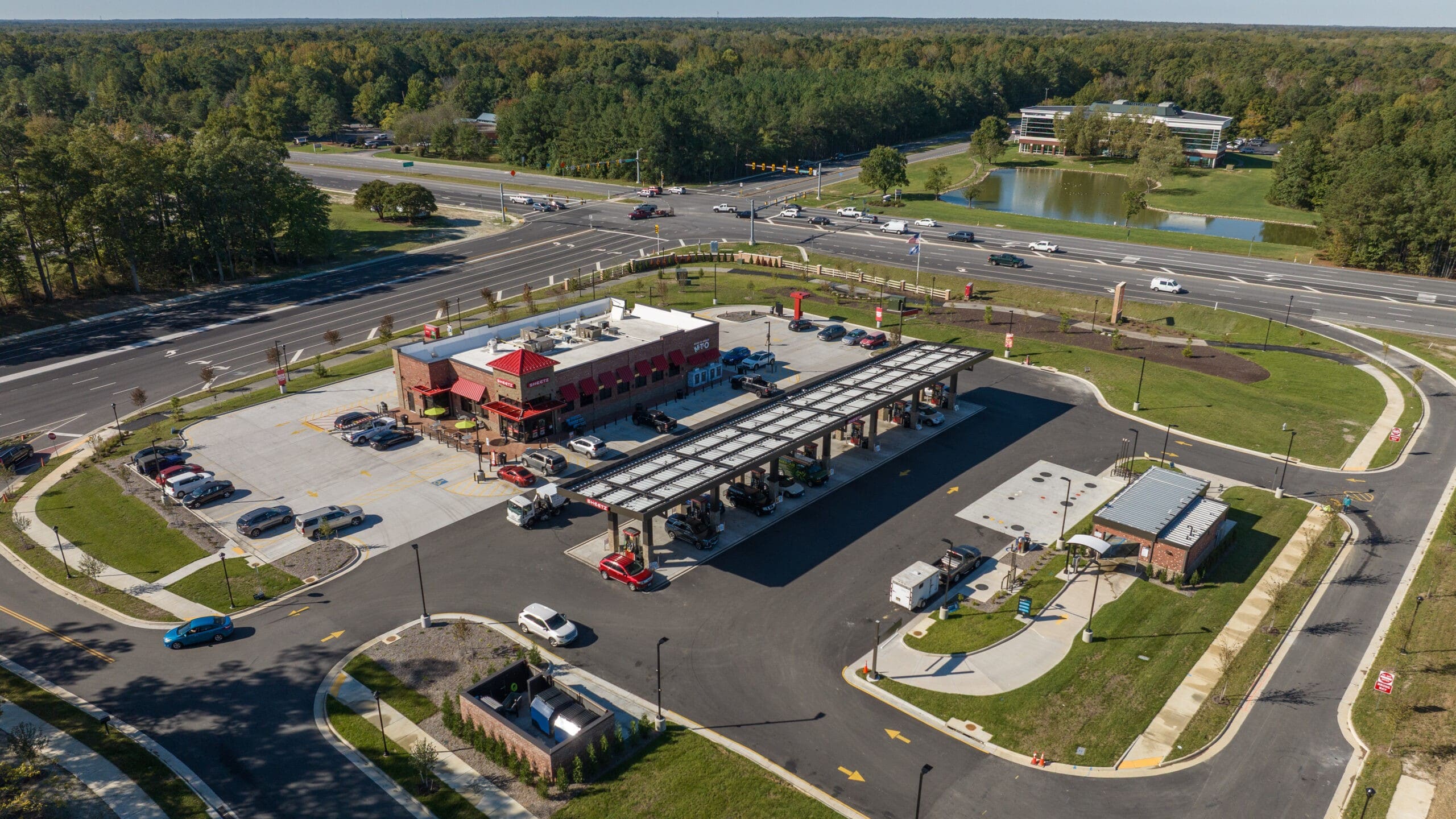
A Sheetz convenience store in Chesterfield County, Virginia
Spotlight: Sheetz, Pulaski County, VA
One of the more instructive projects in our convenience store portfolio is a Sheetz currently under construction along Cleburne Boulevard at the I-81 Exit 98 interchange in Pulaski County, Virginia. The site sits at a busy interchange serving one of the region’s primary freight corridors, with the New River Valley’s Volvo truck manufacturing plant located directly across the street. That industrial context isn’t incidental: the surrounding roadway network carries a significant volume of large commercial vehicles, and the site needed to accommodate not just typical convenience store traffic but also the possibility of a standalone diesel fueling canopy to serve that fleet.
The physical site presented compounding challenges. A fast food restaurant across the street already drew traffic to the corridor, a rock outcropping constrained grading and layout options, and a stream running through the property further limited where buildings and access points could be placed. The result was one of the more geometrically difficult sites our team has worked on in this sector.
Gorove Slade’s role centered on untangling the access and circulation picture: modeling how customers would enter and exit the site given the physical constraints, identifying the workable driveway configurations within VDOT’s requirements, and stress-testing the internal layout to ensure fuel canopy queues, drive-through stacking, and large vehicle movements could coexist without conflict.
Our Commitment to This Sector
That kind of work reflects what Gorove Slade brings to the convenience store sector more broadly: a willingness to look beyond the obvious solution, the technical depth to justify alternatives to regulators, and the practical experience to make complex access situations work. As convenience stores continue to evolve, adding drive-throughs, EV charging, and larger footprints, the transportation engineering only gets more complex. Gorove Slade is already working through those questions with clients, helping shape trip generation guidance that reflects how these sites actually operate today.
If you are developing, acquiring, or permitting a convenience store site in Virginia and beyond, we are the team that understands the unique challenges associated with your development. To learn more about our work with convenience store clients, reach out to Mike Bailey or Carl Hultgren.
Details
- Clients: Various
- Locations: Throughout DC, Maryland, and Virginia
Images courtesy of Sheetz
“Successful site development requires more than technical expertise, and Gorove Slade consistently brings both engineering excellence and a strong understanding of our business needs. Their guidance helps us navigate complex projects efficiently, and their team has earned our confidence time and time again. We know we can count on them to get the job done right.”
Relevant Services
Studies

Design
Entitlement
Relevant Team Members

Mike Bailey, PE, RSP1
Principal

Mary Lee, PE, PTOE
Senior Transportation Engineer

Rob Papera
Associate, Project Manager