Holiday Travel Tips from Transportation Engineers
Four perspectives on navigating the season’s busiest travel period
The holidays bring joy, connection…and some of the year’s most challenging travel conditions. We asked four of our transportation professionals for their best advice on getting where you need to go safely and efficiently this season.
A little planning, some strategic timing, and heightened awareness can transform holiday travel from stressful to manageable. However you choose to get where you’re going, all of us at Gorove Slade wish you safe travels and time well spent with the people who matter most.
Know Your Options Before You Go
Kelsey Murray, Project Transportation Engineer
The same multimodal analysis we apply to development projects can help you plan smarter holiday trips. Before defaulting to driving, check out what alternatives exist at your destination. Does that shopping center have Capital Bikeshare docking stations? Is there a Zipcar location nearby?
In the District, micromobility options have expanded significantly, and dockless vehicles such as bikes and scooters can be picked up and dropped off throughout the city using company-specific mobile apps, offering flexibility for that last mile to your destination.
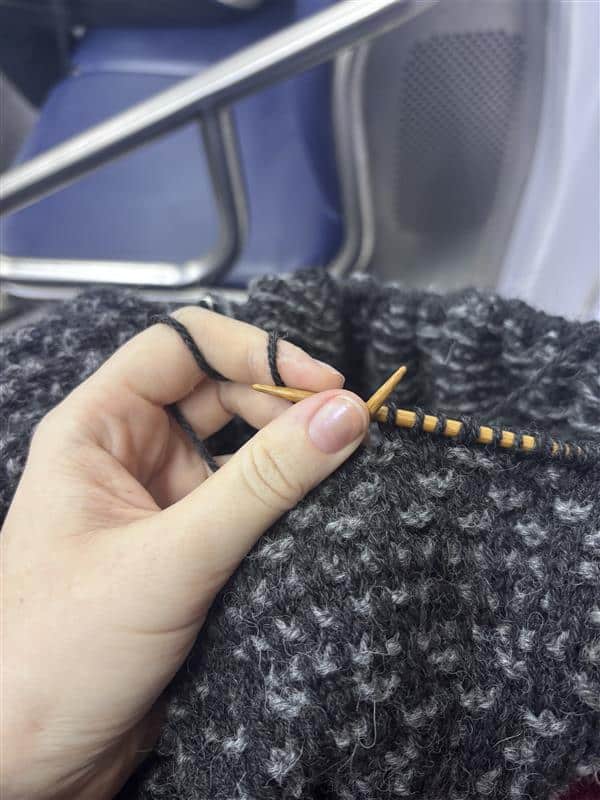
For longer trips, consider the train. These journeys can become productive time—bring a book, catch up on work, or even tackle those holiday crafts. Personally, I enjoy knitting (that’s my handiwork in the photo!) when traveling to visit family over the holidays. The key is treating travel time as an opportunity rather than lost hours behind the wheel.
Time It Right
Jake Tufts, Senior Transportation Engineer
Peak holiday travel isn’t just about the day—it’s about the hour. The biggest mistake people make is leaving when everyone else is leaving. I recommend checking your route an hour or two before departure, not just the night before. Road conditions change, and real-time information makes all the difference. Major interchanges and key intersections can see dramatic volume swings during holiday periods—what works at noon might be gridlocked by 4 PM.
One thing we consider in traffic engineering: intersections need to function well during peak demand, but they can’t be so overbuilt that they create problems during normal conditions. The same principle applies to your travel planning. Don’t just plan for the worst-case scenario—plan for the realistic scenario, which means understanding when and where congestion actually occurs on your route.
Build in Backup Plans
Michelle Imarah, Transportation Engineer
During the holidays, transportation networks get stressed in every mode. That’s why having alternatives matters. If you’re taking Amtrak, book well in advance—trains get more expensive and more crowded as departure dates approach, and delays become more common during peak travel periods. Watch ticket prices after booking; Amtrak will refund the difference if fares drop.
For East Coast trips, buses and trains often beat driving. Getting to New York City by bus takes about four hours with no tolls, no parking hassles, and no driving stress. You arrive directly at transit hubs ready to connect to your final destination.
The same multimodal thinking we apply to development projects applies to personal travel. When we evaluate a site, we map proximity to transit options and ensure connectivity. Apply that lens to your holiday plans: What’s within walking distance of where you’re staying? What transit options connect your arrival point to your destination?
When driving through busy commercial areas, remember that pedestrian volumes spike during the holiday season. At unsignalized crosswalks, especially, visibility becomes critical as evening comes earlier. If you’re crossing the street, make yourself visible—raise your hand, make eye contact with drivers, and don’t assume you’ve been seen.
Drive Defensively
Shashwat Anant, Project Transportation Engineer
When road travel is unavoidable, approach it methodically. A calm start often leads to a safer trip.
Focus your attention on high-risk zones. Interchanges, signalized intersections, and work zones see elevated crash activity during holiday periods. These are places to slow down, increase following distance, and stay especially patient. A comfortable gap between vehicles gives you reaction time—critical when weather conditions extend stopping distances.
Stay distraction-free. Set your playlist, program your route, and silence notifications. Once you’re driving, your attention should be completely on the road. This single action may be the most effective safety measure available to you.
Finally, watch for people, not just other vehicles. Pedestrians and cyclists are out in higher numbers around shopping centers and residential areas. Yield early, make eye contact, and ensure you’re visible to vulnerable road users. Defensive driving means anticipating what others might do and giving yourself room to respond.